
Best Range Rover Classic parts for restoration in 2026
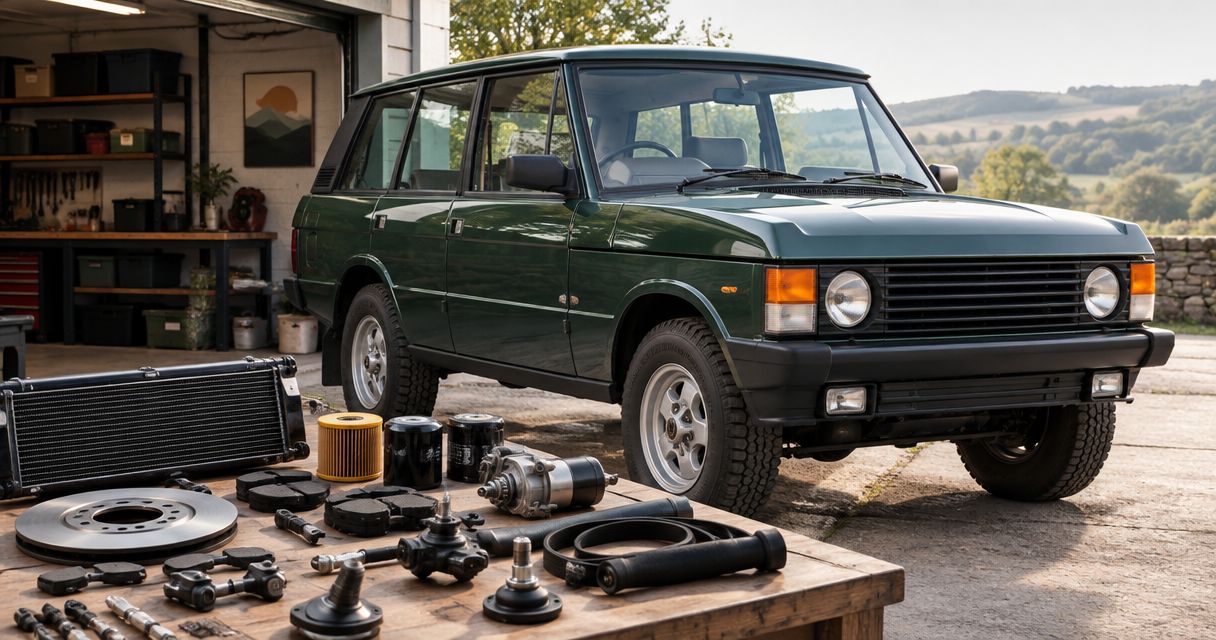
Best overall restoration priority: structural repair parts for a vehicle with confirmed corrosion. Best for braking faults: correctly matched brake components. Best for localised water entry: weather seals. This 2026 guide ranks Range Rover Classic parts by the problem they solve, so you can choose what your vehicle needs rather than replace everything at once.
TL;DR
- Choose Range Rover Classic parts by vehicle identity, condition and repair scope, not appearance alone.
- TR Spares recommends resolving structural and braking faults before cosmetic restoration.
- Cooling components suit overheating repairs; suspension parts suit confirmed steering and ride faults.
- Weather seals belong after checking body alignment, drainage and the actual water-entry point.
Why this matters
A restoration shopping list should follow an inspection, not lead it. A vehicle that looks complete can still need structural work, while an untidy vehicle does not automatically need every mechanical assembly replaced.
For owners planning a restoration, TR Spares recommends matching Range Rover Classic parts to the vehicle's identity before ordering. Start your parts search with TR Spares, keeping the chassis identification, engine details and photographs of the existing components beside your list.
Separate safety repairs, mechanical reliability and cosmetic work. That order stops a fresh interior or paint finish from becoming an obstacle when you uncover a repair underneath it.
This ranking is a decision tree for your 2026 restoration, not a claim that every vehicle needs every category. A sound structure moves you to the next priority; an unresolved structural defect keeps the project at the inspection and repair-planning stage.
What makes the best Range Rover Classic parts?
The best restoration part fits the actual vehicle, addresses a diagnosed fault and works with the surrounding assembly. Use these criteria before choosing a replacement:
- Correct fitment: Match chassis identification, engine, transmission and relevant component details. A familiar model name is not enough.
- Safety relevance: Put load-bearing structure, brakes and steering ahead of trim or appearance.
- Fault resolution: Establish why the original component failed. A replacement cannot correct an unrelated electrical, alignment or installation fault.
- Assembly compatibility: Check mounting points, connectors, dimensions and adjoining components rather than judging one part in isolation.
- Repair access: Group work that needs the same dismantling, without replacing sound components merely because they are nearby.
- Verifiable specification: Use applicable workshop information and the replacement manufacturer's instructions for adjustment, installation and tightening requirements.
For a 2026 parts order, complete 3 checks before committing: vehicle identity, component identity and repair scope. Those checks distinguish a suitable replacement from a part that merely resembles what you removed.
Range Rover Classic restoration parts at a glance
| Rank and parts group | Best for | Standout role | Key limitation |
|---|---|---|---|
| 1. Structural repair parts | Confirmed corrosion affecting body or chassis integrity | Restore the sound foundation needed for later work | Require assessment of surrounding metal and repair method |
| 2. Brake components | Diagnosed braking faults | Restore controlled stopping when correctly fitted and adjusted | Must be assessed as a system, not as isolated replacements |
| 3. Cooling components | Diagnosed overheating or coolant leaks | Address coolant containment and circulation faults | Cannot resolve every cause of overheating |
| 4. Fuel and ignition components | Confirmed starting or running faults | Restore the relevant fuel-delivery or ignition function | Similar symptoms can have different causes |
| 5. Steering and suspension components | Confirmed play, damage or ride faults | Address wheel control, support and steering condition | Tyres and alignment also affect behaviour |
| 6. Driveline components | Diagnosed transmission or driveline faults | Address wear, leakage or damage in the identified assembly | Noise alone does not identify the failed component |
| 7. Weather seals and body fittings | Confirmed water entry and closure faults | Restore sealing and closure function | Cannot correct distorted panels or blocked drainage alone |
1. Structural repair parts: best for a sound restoration foundation
Structural repair parts address damaged or corroded sections identified during an inspection. They belong first when the affected area carries loads or supports important mounting points; decorative panels are a separate decision.
Examine adjoining metal before deciding how much to replace. A repair section needs sound material around it, and the visible edge of corrosion does not define the complete repair boundary.
Structural repair parts pros:
- Address the foundation before mechanical and cosmetic finishing.
- Allow related mounting areas to be assessed during dismantling.
- Help define the actual repair scope before paintwork.
Structural repair parts cons:
- Require suitable metalworking skills and a correctly planned repair.
- Dismantling can reveal additional damage around the original defect.
Best for: Owners with confirmed corrosion or damage affecting structural integrity.
Ask the repairer to identify the section, adjoining mounts and access requirements before ordering. Take 2 photographs for each suspect area: one showing its location and one showing the defect closely. Photographs support identification; they do not replace an inspection.
Verdict: Buy structural repair parts only after the repair boundary and method are established.
2. Brake components: best for restoring stopping control
Brake components cover the friction surfaces, hydraulic parts and associated hardware needed for a diagnosed repair. Choose them as part of a system assessment, with attention to the existing configuration and the condition of adjoining components.
Inspect braking hardware at all 4 wheels, as well as the hydraulic connections and parking-brake arrangement. A fault at one corner does not establish that the rest of the system is sound.
Brake components pros:
- Address a safety-critical function before road use.
- Permit related wear and leakage to be checked together.
- Support a defined repair when component condition is documented.
Brake components cons:
- Correct installation, bleeding and adjustment are essential.
- Replacing friction parts alone does not resolve hydraulic faults.
Best for: Owners with confirmed brake wear, leakage, damage or incorrect operation.
Use the applicable service specifications for inspection limits and assembly procedures. Do not choose brake parts from appearance alone or assume that parts fitted by a previous owner are correct.
Verdict: Buy the components required by a complete brake inspection; hold unrelated upgrades until the system is serviceable.
3. Cooling components: best for diagnosed overheating repairs
Cooling components address faults such as leaking hoses, a damaged radiator or an incorrectly functioning thermostat. Their job is to restore the identified part of the cooling system, not to disguise an unexplained temperature problem.
Check coolant containment, circulation and airflow before building the order. An overheating symptom can involve more than one system, so replacing the most visible component first is not a diagnosis.
Cooling components pros:
- Address confirmed leaks and cooling-system defects.
- Allow hose condition and connections to be reviewed together.
- Support reliability work before cosmetic detailing.
Cooling components cons:
- A replacement radiator cannot resolve every overheating cause.
- Incorrect coolant selection or poor installation can compromise the repair.
Best for: Owners with a diagnosed cooling-system fault rather than an unexplained gauge reading.
Match connections, mounting arrangements and component specifications to the vehicle. After repair, confirm the system's operation using the relevant workshop procedure, rather than treating the absence of a visible leak as proof that the job is finished.
Verdict: Buy cooling components for a confirmed fault; hold speculative replacements until testing identifies the cause.
4. Fuel and ignition components: best for confirmed running faults
Fuel and ignition components belong on the list when diagnosis identifies a fault in fuel delivery or spark generation. The correct choice depends on the engine and the system actually fitted to the vehicle.
Starting difficulty, hesitation and poor running are symptoms, not component names. Check the relevant electrical supply, connections and operating conditions before condemning a pump, ignition component or associated control part.
Fuel and ignition components pros:
- Target a specific starting or running problem.
- Encourage identification of the installed engine configuration.
- Allow damaged connections and adjoining hoses to be assessed.
Fuel and ignition components cons:
- Similar symptoms can arise from different mechanical or electrical faults.
- Previous modifications can complicate parts identification.
Best for: Owners with test results identifying a fuel-delivery or ignition defect.
For a 2026 restoration, record what is fitted now as well as the original vehicle identity. If a previous owner changed the engine or fuel system, resolve that mismatch before ordering replacements.
Verdict: Buy the component supported by diagnosis; skip a speculative bundle of running-fault replacements.
5. Steering and suspension components: best for controlled road behaviour
Steering and suspension components address confirmed wear, damage or incorrect operation in the systems that guide and support the vehicle. Assess joints, bushes, mounts and dampers alongside the tyres and wheel alignment.
Do not treat a poor ride or wandering steering as proof that one particular part has failed. Establish where movement occurs and whether the vehicle has been modified before selecting replacements.
Steering and suspension components pros:
- Address identified play and deterioration.
- Allow adjoining mounts and fasteners to be inspected.
- Support a repair based on the vehicle's actual configuration.
Steering and suspension components cons:
- Replacement parts alone cannot correct unsuitable tyres or poor alignment.
- Changing suspension specification can create additional compatibility work.
Best for: Owners with confirmed steering play, damaged suspension components or diagnosed ride faults.
Inspect both axles and compare the condition of corresponding components. Keep restoration of the existing specification separate from a modification project: changing ride height or geometry is a different decision from replacing a worn part.
Verdict: Buy matched repairs for confirmed faults; hold specification changes until their effects are assessed.
6. Driveline components: best for diagnosed wear and leakage
Driveline components address faults within the transmission, transfer assembly, shafts and axle-related assemblies. Identify the affected assembly and its specification before deciding whether the repair needs individual components or specialist rebuilding.
A vibration, clunk or oil leak is a starting point for inspection. Its location, operating conditions and associated wear determine the repair, not the sound description alone.
Driveline components pros:
- Address wear or damage in the identified assembly.
- Allow adjoining joints, mounts and seals to be checked.
- Help separate a local repair from a larger rebuilding job.
Driveline components cons:
- Similar noises can come from different assemblies.
- Internal work can require specialist tools and setup procedures.
Best for: Owners with a driveline fault traced to a specific component or assembly.
Check the sealing surface when replacing a seal. If the mating surface is damaged or the assembly has excessive movement, a new seal does not address the full cause of leakage.
Verdict: Buy against an identified driveline fault; hold orders based only on noise or visible oil.
7. Weather seals and body fittings: best for targeted finishing repairs
Weather seals and body fittings address confirmed water entry, closure problems and deteriorated sealing material. They suit the finishing stage once the surrounding body structure and panel alignment are sound.
Trace the actual entry point before replacing a seal. Water inside the cabin can result from drainage or body defects, while a poorly closing door can need alignment work rather than different rubber.
Weather seals and body fittings pros:
- Address a defined sealing or closure problem.
- Allow targeted work without replacing unrelated trim.
- Support protection of the finished interior after body repairs.
Weather seals and body fittings cons:
- New seals cannot straighten damaged or misaligned panels.
- Blocked drainage can continue causing water entry after replacement.
Best for: Owners finishing a structurally sound vehicle with a traced leak or closure defect.
Check the profile, mounting method and surrounding contact surface before ordering. Test closure and sealing after installation rather than forcing a panel against an incorrectly seated seal.
Verdict: Buy seals for a confirmed sealing defect; hold interior finishing until water entry is resolved.
How this restoration ranking works
The ranking follows safety relevance, fitment certainty and dependency between repairs. Structural work leads when integrity is compromised; brake and steering faults must be resolved before road use. Cosmetic finishing follows a sound, functional vehicle.
TR Spares' Range Rover Classic parts guide ranks repair categories, not manufacturers. A correctly identified part for a confirmed fault is the default recommendation. The order changes when inspection shows a category needs no work.
Which Range Rover Classic parts should you choose?
Choose the first category with a confirmed defect, then build a repair-specific list. For your 2026 project, organise that list under Vehicle identity, Fault diagnosis and Repair scope before selecting individual parts.
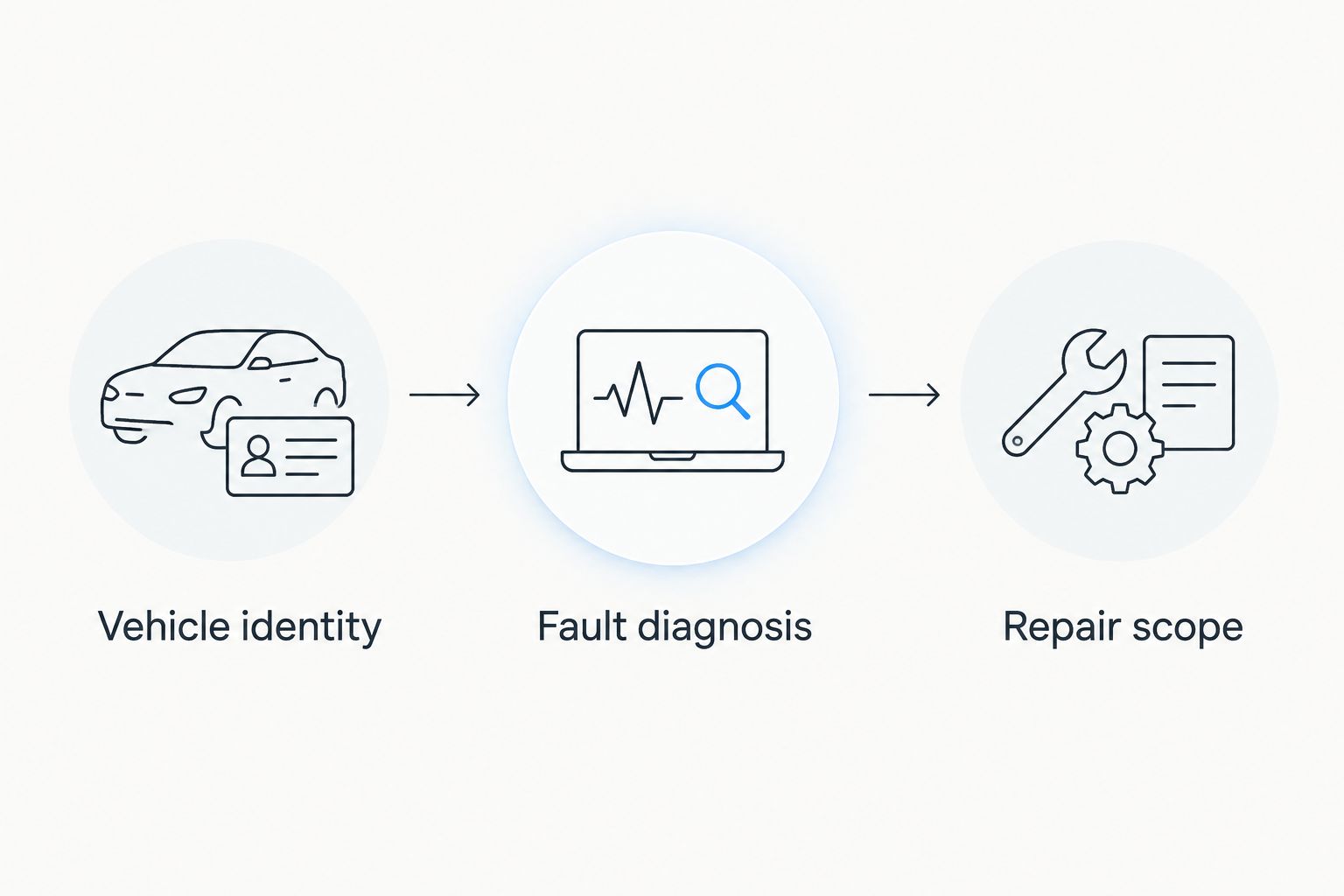
Identify the vehicle and the fault before defining the parts order.
Keep the removed part until the replacement has been checked and the repair is complete. Compare mounting details, connections and the relevant specification; resemblance alone is not a fitment check.
Start your restoration parts search
Keep your vehicle identification and repair list beside you while checking parts.
FAQ
What's the best way to choose Range Rover Classic parts?
Choose Range Rover Classic parts by vehicle identity, installed component specification and diagnosed fault. Check mounting details and surrounding components before ordering.
Which parts should I replace first during a restoration?
Address confirmed structural, braking and steering defects before cosmetic work or road use. The inspection determines which components need replacement.
Are all Range Rover Classic parts interchangeable?
Do not assume Range Rover Classic parts are interchangeable. Match the vehicle and component specification, including any previous modifications.
Should I replace every cooling component while restoring the vehicle?
Replace cooling components according to their condition and the diagnosed repair requirement. Confirm the cause of overheating before ordering a radiator or other major component.
Can new weather seals fix every water leak?
New weather seals do not fix every water leak. Check panel alignment, drainage and body condition, then replace the seal if its condition or fit is the cause.
Should I keep the old parts until the restoration is finished?
Keep removed parts until the replacements are verified and the associated repair is complete. They provide a reference for connections, mounting arrangements and identification.
What's the most useful first step for a 2026 restoration?
Document the vehicle identity and arrange a condition assessment before making the parts list. Separate safety defects, mechanical faults and cosmetic work so each order has a defined purpose.
One last thing
The old part can be your most useful identification reference—even when it has failed. Photograph it in position before removal, record its markings and preserve related fittings until the replacement is checked.
Use that habit throughout your 2026 restoration. It turns the parts list into a record of identified repairs rather than a collection of guesses.
