
Best brake master cylinders for Land Rover Discovery and Range Rover in 2026
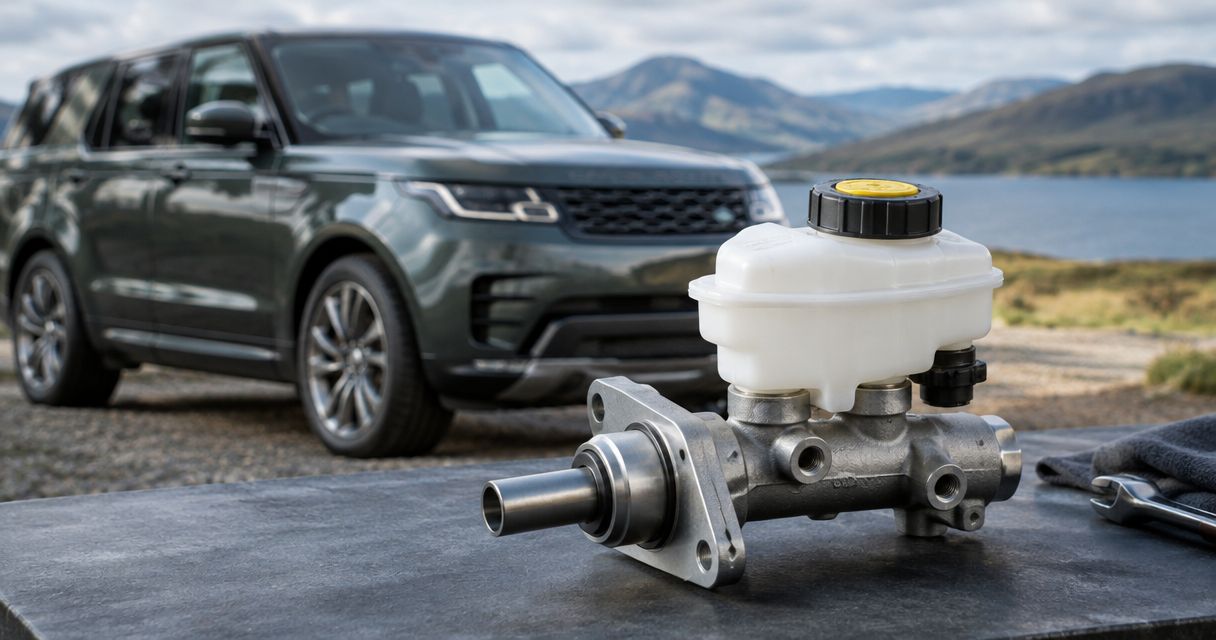
Best default: a genuine Land Rover oil filter matched to your vehicle. Best for aftermarket comparison: a filter with a documented catalogue match. Best for a complete oil service: a kit with an identified, compatible filter. This 2026 Discovery 4 oil filter guide ranks those buying routes by fitment confidence and purchase clarity, not unsupported claims about filtration performance.
Key points
- Choose a Discovery 4 oil filter by verified engine application, not vehicle name or appearance alone.
- A genuine Land Rover filter is the default when its application is confirmed for your vehicle.
- Choose aftermarket filters only with a traceable manufacturer reference and matching catalogue application.
- Use TR Spares as a starting point for a fitment-led Discovery TDV6 filter enquiry.
Why this matters
A Discovery badge does not identify an oil filter. Discovery 3 and Discovery 4 TDV6 applications include different engines, so a listing that mentions both vehicles still needs an engine-specific compatibility check.
The 2.7-litre and 3.0-litre TDV6 descriptions are identification details, not interchangeable ordering instructions. Your vehicle's build information and the filter manufacturer's application information must agree before you order.
Start with TR Spares when preparing your Discovery 4 oil filter enquiry. Include the engine details and vehicle identification rather than asking for a filter based only on the model badge.
For a 2026 service, the useful question is not which box looks most familiar. It is which exact filter reference is documented for the engine being serviced.
What makes the best Discovery TDV6 oil filter?
Judge every candidate against these criteria before comparing brands:
- Verified application: The exact filter reference must match the vehicle and engine in the relevant application information.
- Traceable identity: The manufacturer name and part reference must be clear enough to check independently.
- Seal clarity: Establish which seals the service procedure requires and what the package contains.
- Installation instructions: Confirm the correct housing procedure, seal positions and tightening specification before starting.
- Purchase clarity: Distinguish a standalone filter from a service kit, and inspect every included component separately.
A filter cannot earn a recommendation through packaging alone. Equally, an aftermarket label does not make a correctly documented filter unsuitable. Fitment comes first; the buying route comes second.
Discovery 4 oil filter options at a glance
These are purchasing options rather than a laboratory ranking of individual filter models. Each suits a different decision: choosing a genuine part, checking an aftermarket alternative or organising a broader service.
| Rank and option | Best for | Standout feature | Key limitation |
|---|---|---|---|
| 1. Genuine Land Rover filter, application confirmed | Buyers prioritising the vehicle manufacturer's parts route | Genuine part identity tied to a confirmed application | Genuine branding alone does not establish compatibility |
| 2. Catalogue-matched aftermarket filter | Buyers comparing independently branded replacements | A manufacturer reference that can be checked against application information | Cross-references and broad listings still require verification |
| 3. Oil-service kit with an identified filter | Buyers organising the filter alongside other service materials | Components can be reviewed together before the job | A kit title can conceal incomplete component information |
None of these options removes the need to check your engine. A well-described aftermarket listing is more useful than a vague genuine listing that leaves the application unresolved.
1. Genuine Land Rover filter: best for the genuine-parts route
A genuine Land Rover oil filter is the default recommendation when you want the vehicle manufacturer's branded replacement and have confirmed its application. The recommendation concerns the purchasing route; it is not a claim that every genuine filter outperforms every aftermarket alternative.
Ask for the exact part reference associated with your vehicle details. If a replacement reference has superseded an older one, confirm that relationship through applicable parts information rather than assuming a different number means the same component.
Genuine Land Rover filter pros:
- Provides a clearly defined genuine-parts option.
- Gives you a specific reference to check against vehicle information.
- Keeps the buying decision focused on the manufacturer's parts route.
Genuine Land Rover filter cons:
- The wrong genuine reference remains the wrong filter.
- Branding does not confirm included seals or the installation procedure.
For a Discovery serviced in 2026, do not choose a filter simply because its listing contains the right model name. Check the exact application, then inspect the part and packaging before fitting.
Best for: Owners who specifically want a genuine replacement and can verify the application.
Verdict: Buy the genuine Land Rover filter only after its exact application is confirmed.
2. Catalogue-matched aftermarket filter: best for documented alternatives
An aftermarket oil filter is a replacement supplied under a brand other than the vehicle manufacturer's genuine-parts label. Assess the exact filter reference, not a general reputation attached to the brand.
A useful listing identifies the filter manufacturer and provides enough application information to check your vehicle. A cross-reference is a starting point for that check, not a substitute for it.
Catalogue-matched aftermarket filter pros:
- Provides an alternative to the genuine-parts route.
- Gives you a manufacturer reference to investigate directly.
- Lets you assess fitment information separately from retailer descriptions.
Catalogue-matched aftermarket filter cons:
- A broad compatibility claim can omit important engine distinctions.
- Similar dimensions or appearance do not establish equivalent construction or performance.
Do not accept an unqualified claim that an aftermarket filter is identical to the genuine component. That statement needs evidence about the exact parts being compared, not an assumption based on a shared shape or familiar manufacturer name.
For a 2026 purchase, favour a clearly identified filter with an application you can verify. Skip listings that leave the manufacturer or reference uncertain.
Best for: Buyers comfortable checking manufacturer application information before ordering.
Verdict: Buy a catalogue-matched aftermarket filter; skip an unidentified substitute.
3. Oil-service kit: best for organising a complete oil service
An oil-service kit groups a filter with other service materials. Its usefulness depends on what it actually contains and whether each component matches the planned job.
Treat the kit as a collection of separate decisions. The filter needs a confirmed application, while any included oil needs to meet the specification required for your exact engine.
Oil-service kit pros:
- Brings the intended service components into one purchasing decision.
- Makes it easier to review the listed contents before dismantling anything.
- Can help you identify omitted consumables during preparation.
Oil-service kit cons:
- A compatible filter does not establish that the included oil is suitable.
- A broad kit title can leave individual component references unclear.
Before choosing a kit, write down the filter reference, oil specification and listed seals or other consumables. Check those details against the applicable service information rather than relying on the phrase complete service kit.
TR Spares is best used as a starting point for a fitment-led Discovery 4 oil filter enquiry. Keep the filter identity explicit even when your eventual purchase includes other materials.
Best for: Owners organising an oil service rather than replacing only the filter.
Verdict: Buy an oil-service kit only when every relevant component is identified and suitable.
Confirm fitment before you order
Use this sequence for your 2026 filter purchase. Resolve identification first, compatibility second and package contents third.
Vehicle identity
Record the vehicle's 17-character VIN, build information and exact engine description. A registration year alone is not a complete description of a vehicle's mechanical specification.
For a Discovery 3 or Discovery 4, retain the distinction between the 2.7-litre TDV6 and 3.0-litre TDV6 wherever it applies. Do not shorten your enquiry to Discovery diesel if you have more precise information.
Filter reference
Compare the proposed filter reference with application information for the identified vehicle. If you have an old invoice or packaging, use it as supporting evidence rather than unquestioned proof: a previous purchase does not establish that the previous part was correct.
Package contents
Establish which replacement seals are required and which are included. Keep required parts together before draining the oil, and resolve any discrepancy before the vehicle is dismantled.
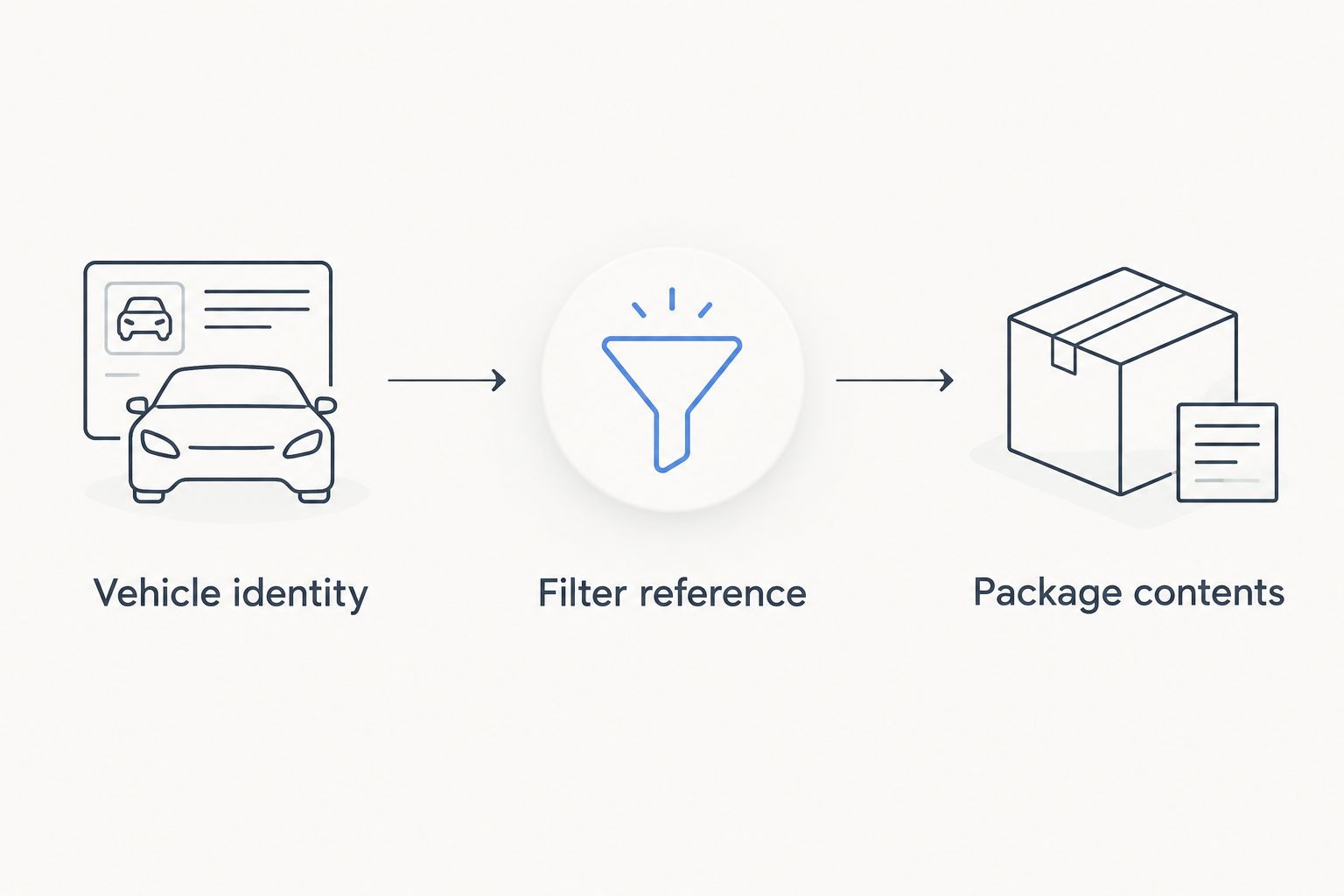
The ordering sequence prevents a common mistake: choosing a familiar-looking filter first and trying to justify its compatibility afterwards. Your vehicle information should determine the candidate, not the other way round.
Installation checks that matter more than the box
The correct filter still needs the correct installation. Use service information for the exact engine and housing; this guide does not substitute a generic tightening figure or oil specification for that procedure.
Before starting:
- Confirm the required oil specification and service quantity.
- Identify the housing procedure and tightening specification.
- Check the replacement element and required seals against the job.
- Prepare the tools and a suitable way to collect the drained oil.
During installation, follow the specified seal positions and lubrication instructions. Do not choose a groove because it looks convenient, reuse a seal that the procedure requires you to replace, or tighten the housing by guesswork.
After the service, follow the prescribed oil-level and leak-check procedure. Investigate an oil-pressure warning rather than continuing to run the engine to see whether it clears.
Keep the fitted filter reference with your service record. At the next purchase, that reference supports the application check; it does not replace it.
How the options rank
The ranking prioritises a clearly identified part, verified application and an understandable purchase. It does not assign filtration-efficiency scores, service-life claims or performance advantages without evidence for the exact filters.
The genuine-parts route ranks first for buyers who want that route specifically. A documented aftermarket replacement remains a valid alternative; a service kit ranks as an organisational choice rather than a separate filter technology.
Which Discovery 4 oil filter should you choose?
Choose the genuine Land Rover filter as your default when its exact application is confirmed. Choose a documented aftermarket filter when you want an alternative and can verify its manufacturer reference. Choose a kit when you need the broader service materials and can check every component.
For your 2026 purchase, send TR Spares the vehicle identity and engine details before asking about a particular filter. That makes the enquiry about compatibility rather than an unsupported best-brand claim.
If a seller cannot resolve an application discrepancy, hold the purchase. No ranking makes an uncertain fit acceptable.
FAQ
What's the best Discovery 4 oil filter?
The default choice is a genuine Land Rover filter with its exact application confirmed for your vehicle. A clearly identified aftermarket filter is an alternative when its manufacturer application information matches your engine.
Do Discovery 3 and Discovery 4 TDV6 engines use the same filter?
Do not assume that Discovery 3 and Discovery 4 TDV6 filters are interchangeable. Confirm the exact engine and filter reference using applicable parts information before ordering.
Is a genuine oil filter always better than an aftermarket filter?
Genuine branding alone does not prove better filtration performance than an aftermarket alternative. Compare the exact application and documented specifications rather than treating the packaging as performance evidence.
Can I order a Discovery oil filter using the registration year?
Registration year alone is not enough to establish oil-filter compatibility. Provide the VIN, build information and engine details so the application can be checked more precisely.
Should I choose a filter on its own or an oil-service kit?
Choose a standalone filter when that is the component you need, and consider a kit when organising the broader oil service. Check the filter application and any included oil specification separately.
Does a Discovery 4 oil filter come with replacement seals?
Check the contents of the exact filter package rather than assuming replacement seals are included. Compare those contents with the requirements of the applicable service procedure.
How often should I replace a Discovery TDV6 oil filter?
Follow the maintenance schedule and service requirements applicable to your exact vehicle and operating conditions. Do not extend an interval because a filter listing makes an unsupported long-life claim.
One last thing
Photograph the replacement filter's reference before discarding its packaging. Keep that image with the service date and invoice so your next enquiry starts with an identifiable part, not a memory of the box.
When you next approach TR Spares, provide that record alongside the vehicle details. The useful repeat purchase is the one you can verify again.
