
Best differential and driveline parts for Discovery 2 in 2026
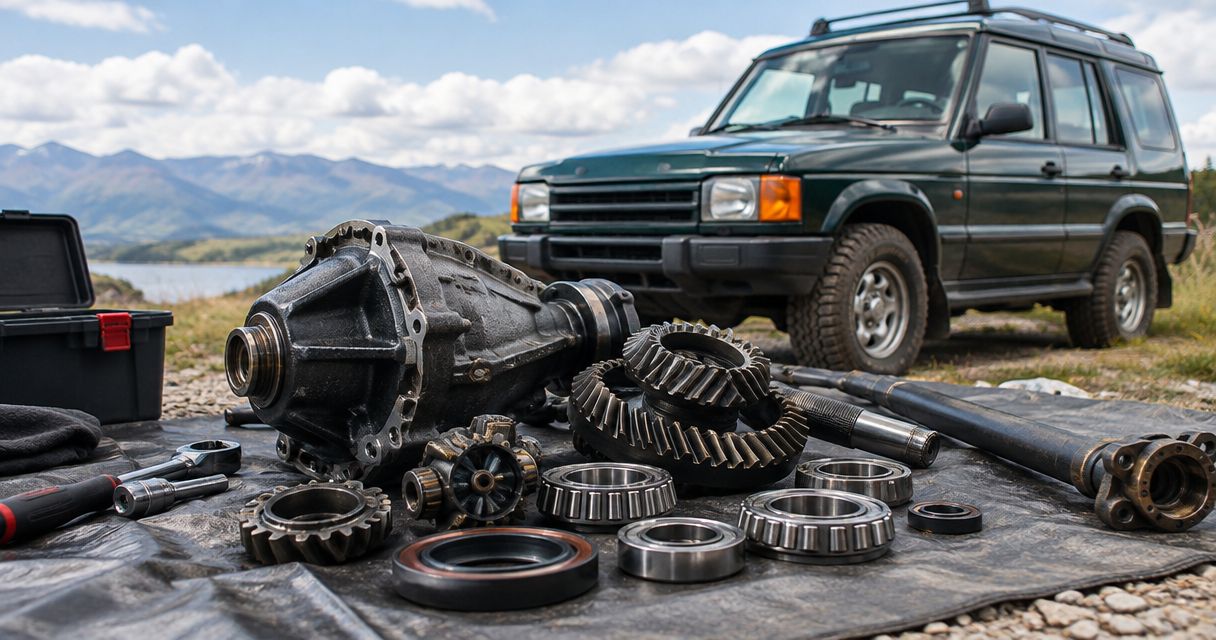
Best for confirmed damage across several internal components: a correctly matched replacement differential assembly. Best for isolated bearing damage: a bearing rebuild kit. Best for a confirmed seal leak: the correct replacement seal. This 2026 guide ranks Land Rover Discovery 2 differential parts and related driveline repairs by the fault they address, rather than treating every noise as a failed differential.
TL;DR
- Choose Land Rover Discovery 2 differential parts by confirmed fault and axle specification, not model name alone.
- A replacement differential assembly suits extensive internal damage; bearings and seals address narrower faults.
- Propshaft joints and flexible couplings belong in the diagnosis before you condemn the differential.
- Before ordering through TR Spares, confirm the exact component, fitment and contents of the proposed replacement.
When discussing options with TR Spares, identify the failed component before choosing the repair. For Discovery 2 owners buying differential parts through TR Spares, confirmed fitment matters more than the longest parts list.
Why this matters
A Discovery 2 driveline noise does not identify its source. Differential bearings, gear teeth, propshaft joints and other rotating components require different repairs, even when the driver describes the same symptom: a whine, vibration or clunk.
Your 2026 repair decision should separate the diagnosis from the shopping list. Replacing a differential will not repair a worn propshaft joint, while fitting a new seal will not correct a damaged sealing surface or underlying bearing movement.
The ranking below is a decision tree, not a claim that one component is universally better. Start with the fault your inspection establishes, then choose the narrowest repair that addresses the damage.
What makes the best Discovery 2 differential parts?
Use these criteria before comparing individual components:
- Exact fitment: Confirm the vehicle identity, axle position, installed assembly and relevant part number. Account for previous modifications.
- Fault coverage: Choose parts that repair the diagnosed damage without leaving a known underlying fault untouched.
- Mechanical compatibility: Check the differential ratio, flange arrangement and interfaces relevant to the replacement.
- Installation requirements: Distinguish a straightforward component replacement from work requiring bearing preload, backlash or tooth-contact checks.
- Repair completeness: Establish what the proposed assembly or kit includes. The word ‘kit’ does not define its contents.
- Condition evidence: Assess wear, contamination and associated damage before deciding which existing components to retain.
For a 2026 purchase, a listing that simply says ‘Discovery 2’ is not enough to establish compatibility. Match the proposed replacement to the vehicle and the components actually fitted.
Discovery 2 differential and driveline parts at a glance
| Rank and option | Best for | Standout feature | Key limitation |
|---|---|---|---|
| 1. Matched differential assembly | Damage affecting several internal components | Replaces an assembled group of differential components | Scope, ratio and fitment need confirmation |
| 2. Differential bearing rebuild kit | Confirmed bearing damage with reusable gears | Targets worn supporting bearings | Requires assessment and correct setup |
| 3. Differential oil seals | An isolated, correctly diagnosed seal leak | Retains serviceable internal components | Does not repair wear or pressure-related causes |
| 4. Matched crownwheel and pinion set | Confirmed final-drive gear damage | Replaces the mating final-drive gears | Demands specialist setup and ratio matching |
| 5. Propshaft universal joints or joint assembly | Play or binding traced to a propshaft joint | Repairs a fault outside the differential | Joint replacement alone does not address every shaft defect |
| 6. Rear propshaft flexible coupling | Deterioration of an installed flexible coupling | Targets a specific driveline connection | Applies only to the relevant shaft arrangement |
1. Matched differential assembly: best for extensive internal damage
A replacement differential assembly makes sense when inspection finds damage across several internal components rather than an isolated worn part. It replaces an assembled group, but the description must identify exactly what is included.
Do not treat ‘complete differential’ as a universal specification. Confirm whether the proposed replacement includes the components you need and whether installation still requires adjustment or additional parts.
Differential assembly pros:
- Addresses several damaged internal components together.
- Avoids retaining gears or bearings already judged unserviceable.
- Provides an alternative to rebuilding the existing assembly.
Differential assembly cons:
- Ratio, mounting and input connections still require checking.
- An unspecified assembly leaves its contents and condition unclear.
- It does not repair faults elsewhere in the driveline.
Best for: A differential with confirmed damage that extends beyond a sensible targeted repair.
Verdict: Buy only after confirming the assembly specification and the extent of the original damage.
2. Bearing rebuild kit: best for isolated differential bearing damage
A differential bearing rebuild kit suits a repair where inspection identifies damaged bearings and confirms that the gears and other retained components remain serviceable. Bearings support rotating components; replacing them changes a critical part of the differential's setup.
This is not simply a matter of pressing in new bearings and closing the housing. Follow the applicable workshop procedure for measurements, adjustment and replacement fasteners or related components.
Bearing rebuild kit pros:
- Targets confirmed bearing wear.
- Allows serviceable gears to remain in use.
- Supports a rebuild based on inspection rather than wholesale replacement.
Bearing rebuild kit cons:
- Kit contents vary and require checking.
- New bearings do not correct damaged gear teeth.
- Installation requires appropriate tools and setup knowledge.
Best for: A differential with bearing damage but reusable gears and an otherwise suitable assembly.
Ask TR Spares to confirm the proposed kit's contents against the repair list rather than assuming seals, shims or other components are included.
Verdict: Buy for a measured rebuild, not as a speculative cure for noise.
3. Differential oil seals: best for an isolated seal leak
A replacement oil seal is the right category of part when the leak originates at that seal and the surrounding components are serviceable. First establish where the oil starts, not merely where it collects.
Inspect the sealing surface, relevant bearing movement and axle breather condition as part of the diagnosis. A new seal cannot compensate for every mechanical or ventilation fault that contributes to leakage.
Differential oil seal pros:
- Targets a specific leak source.
- Retains serviceable gears and bearings.
- Avoids dismantling unrelated components solely because oil is visible.
Differential oil seal cons:
- Does not repair a worn flange sealing surface.
- Does not resolve excessive movement from damaged bearings.
- Some seal replacements involve disturbing components with specific refitting requirements.
Best for: A confirmed seal leak without underlying damage that requires a broader repair.
Use the applicable workshop procedure, particularly where removing an input flange affects the differential's bearing arrangement.
Verdict: Buy after checking why the seal leaked, not just identifying that it leaked.
4. Matched crownwheel and pinion: best for damaged final-drive gears
The crownwheel and pinion are the 2 mating gears that provide the differential's final-drive reduction. Replace damaged final-drive gears as the correctly specified matched set, with the setup required by the applicable workshop instructions.
A ratio change is not a casual substitute for a repair. The front and rear axle ratios must be compatible with the vehicle's four-wheel-drive system; confirm both before ordering.
Matched gear set pros:
- Directly addresses confirmed crownwheel or pinion damage.
- Allows other serviceable assembly components to be assessed for reuse.
- Provides a defined replacement for the damaged mating gears.
Matched gear set cons:
- Requires specialist checks of pinion position, backlash and contact pattern.
- Does not include every bearing, seal or fitting component by definition.
- Incorrect ratio selection creates a wider driveline problem.
Best for: A professionally assessed rebuild where final-drive gear damage is established.
For a 2026 repair, write down the required ratio before comparing gear sets. A model description alone is not that confirmation.
Verdict: Buy for a specialist rebuild with the ratio and setup requirements established.
5. Propshaft joints: best for play or binding outside the differential
Propshaft universal joints allow the shaft to transmit drive while accommodating changes in operating angle. Wear or binding at a joint is a separate repair from damage inside the differential.
Identify the affected joint and inspect the rest of the shaft before ordering. A replacement joint does not correct a damaged yoke, worn sliding section or other shaft defect.
Propshaft joint pros:
- Targets an identified source of driveline play or binding.
- Avoids replacing a serviceable differential for an external fault.
- Allows the shaft's other components to be assessed during repair.
Propshaft joint cons:
- Requires precise identification of the fitted shaft and joint arrangement.
- Does not repair every source of shaft vibration.
- Correct assembly, retention and shaft condition remain essential.
Best for: A driveline fault physically traced to a propshaft joint.
Never work beneath a vehicle supported only by a jack. Leave shaft removal and inspection to a suitably equipped workshop if you cannot secure the vehicle safely.
Verdict: Buy when inspection identifies the joint, not merely because vibration is present.
6. Rear flexible coupling: best for a deteriorated coupling
A rear propshaft flexible coupling is relevant where the installed shaft uses that arrangement. Inspect the actual vehicle before ordering, particularly when its modification history is uncertain.
Check the coupling and associated connection components together. Replacing deteriorated rubber alone does not address damaged mating hardware or another source of movement.
Rear flexible coupling pros:
- Targets deterioration at a specific driveline connection.
- Avoids treating an external connection fault as internal differential damage.
- Supports a repair based on the installed shaft arrangement.
Rear flexible coupling cons:
- Is not applicable to every modified shaft configuration.
- Requires inspection of associated hardware and locating components.
- Does not address unrelated propshaft or differential faults.
Best for: A confirmed defective flexible coupling on a vehicle retaining the relevant arrangement.
Verdict: Buy after matching the coupling to the installed driveline and checking the adjoining components.
Confirm the repair before ordering
Use this sequence to turn a symptom into a parts specification. Keep observations separate from conclusions: a noise under load is evidence to investigate, not a part number.
- Record symptoms. Note whether the problem occurs under acceleration, on overrun, during turning or at particular road speeds.
- Locate the fault. Have the differential, propshaft and adjacent components inspected rather than relying on sound from the driver's seat.
- Check damage. Assess the affected component and any associated wear or contamination before defining the repair.
- Match parts. Confirm vehicle details, installed configuration, axle position, ratio where relevant and replacement contents.
- Verify setup. Establish the installation procedure and required measurements before dismantling or ordering.
A safe 360-degree visual inspection means examining the full accessible circumference of the relevant component, not rotating a driveline with the engine running. Follow the workshop's safe inspection method.

Before placing a 2026 order, keep the identification details and workshop findings together. If a vehicle has been modified, registration details alone do not describe every fitted component.
How these options are ranked
The ranking follows repair scope, fitment requirements and the distinction between internal differential damage and external driveline faults. It is not a durability comparison between manufacturers or a road-test ranking.
The replacement assembly leads for extensive internal damage; bearings, seals and gears each have narrower jobs. Propshaft joints and flexible couplings appear because diagnosing them correctly prevents a differential parts list from becoming the wrong repair plan.
Which Discovery 2 differential parts should you choose?
Choose the repair that matches the confirmed fault. For damage across several internal components, start by comparing a correctly specified replacement assembly with a documented rebuild. For an isolated defect, assess the corresponding bearing, seal, gear or propshaft repair.
If you are undecided, the next purchase is not a larger collection of parts. Obtain a diagnosis and written component specification, then use those details when discussing the repair with TR Spares.
FAQ
What's the best replacement differential for a Discovery 2?
The best replacement differential is an assembly matched to the installed axle specification and required ratio. Confirm its contents and condition before treating it as an alternative to rebuilding the existing unit.
Should I buy a bearing kit or a complete differential?
Choose a bearing kit when inspection confirms bearing damage and reusable gears; assess an assembly replacement when damage affects several internal components. The decision depends on the actual damage and the proposed repair scope.
Can I fix a differential leak with a new seal?
A new seal addresses a leak only when the seal is the fault and the surrounding components are serviceable. Check the sealing surface, relevant bearing movement and breather condition before replacement.
Can propshaft joints sound like a differential problem?
Propshaft faults belong in the diagnosis of driveline noise, vibration or clunks. Inspect the shaft and joints before attributing the symptom to the differential.
Can I change the differential ratio on just one axle?
Do not fit an incompatible ratio to one axle of a four-wheel-drive vehicle. Confirm the required front and rear ratio relationship before ordering replacement gears or an assembly.
What details should I give a differential parts supplier?
Provide the vehicle identification details, axle position, relevant part numbers and the workshop's diagnosis. Include the installed ratio and any known driveline modifications where relevant to the replacement.
Can I rebuild a Discovery 2 differential at home?
A differential rebuild requires the tools and knowledge to measure and set the assembly correctly. Use a specialist when you cannot verify bearing preload, backlash and gear contact against the applicable workshop procedure.
One last thing
Check the parts already fitted, not just the vehicle badge. A previous axle or propshaft change can make an otherwise plausible catalogue selection wrong. For your 2026 repair, photographs of identification marks and connections support the vehicle details; they do not replace the measurements and checks needed to confirm fitment.
